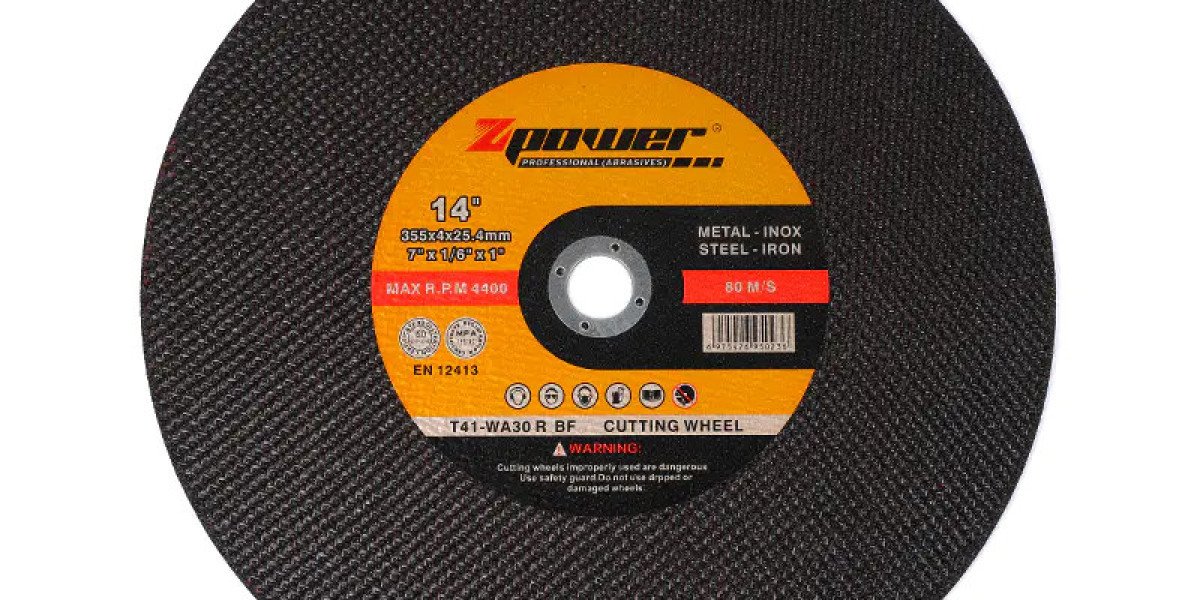

An Alumina Grinding Wheel Factory serves a wide range of industries that rely on abrasive tools for shaping, cutting, and surface finishing. Alumina, also known as aluminum oxide, is valued for its hardness, wear resistance, and adaptability across different materials. Grinding wheels produced with alumina abrasives are commonly used in metalworking, machinery maintenance, and component fabrication, where stable performance is required under repeated mechanical stress.
Production within an Alumina Grinding Wheel Factory usually begins with raw material preparation. Alumina grains are classified by size and purity to match specific grinding applications. These grains are combined with bonding agents, which may include vitrified, resin, or rubber bonds, depending on the intended use of the wheel. Precise formulation at this stage influences cutting behavior, heat resistance, and service life during operation.
Mixing and molding are central steps in factory operations. In an Alumina Grinding Wheel Factory, measured quantities of abrasive grains and bonding materials are blended to achieve uniform distribution. The mixture is then pressed into molds that define the wheel's shape, thickness, and bore size. Consistent pressure and mold accuracy are essential, as variations can affect balance and grinding stability once the wheel is in use.
After molding, wheels undergo controlled curing or firing processes. An Alumina Grinding Wheel Factory carefully manages temperature and timing during these stages to solidify the bond structure. For vitrified wheels, kiln firing allows the bond to harden and lock abrasive grains in place. Resin-bonded wheels follow different curing cycles, designed to achieve strength without excessive brittleness. These thermal processes require close monitoring to ensure predictable results.
Finishing and inspection follow heat treatment. In an Alumina Grinding Wheel Factory, wheels are trued, balanced, and surface-finished to meet dimensional specifications. Bore accuracy and flatness are checked to ensure compatibility with grinding machines. Visual inspections help identify surface defects, while mechanical tests may assess rotational stability and bond integrity before the wheels proceed to packaging.
Quality control is integrated throughout the production line. An Alumina Grinding Wheel Factory often conducts sampling tests to evaluate hardness, structure, and wear characteristics. Performance testing under simulated grinding conditions helps verify that wheels behave consistently when applied to different materials. Early identification of deviations allows adjustments to formulations or processing parameters without interrupting overall workflow.
Customization is another important aspect of manufacturing. Many users require grinding wheels tailored to specific machines or materials. An Alumina Grinding Wheel Factory addresses this by offering variations in grain size, bond type, and wheel geometry. Modular production planning enables these adjustments while maintaining efficient batch production and predictable scheduling.
Environmental and workplace considerations are gaining attention in abrasive manufacturing. Dust control systems, energy-conscious kilns, and material recovery practices are increasingly common in an Alumina Grinding Wheel Factory. Attention to operator safety, including protective equipment and clear handling procedures, supports stable long-term production and regulatory compliance.
Alumina grinding wheel production depends on controlled material selection, precise processing, and consistent inspection. Through structured workflows and careful thermal management, factories produce abrasive tools suited to demanding industrial environments. As manufacturing requirements evolve, gradual refinements in equipment and processes continue to shape how grinding wheels are produced and applied.