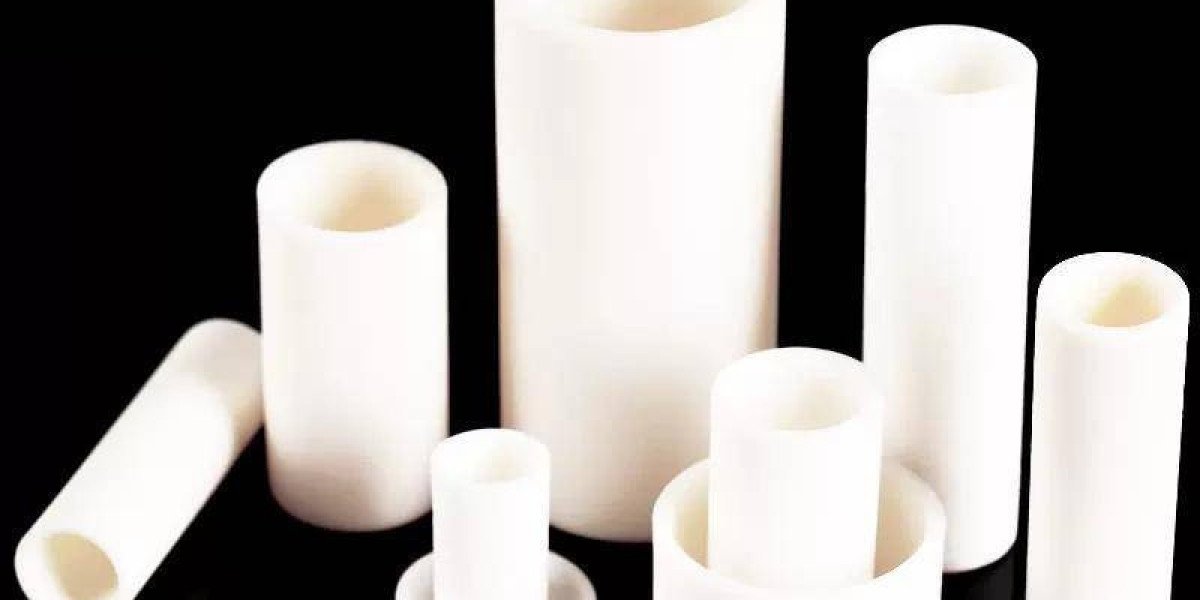

In the field of high durability components, Alumina Ceramics introduced through Zhufa provide a foundation for structural solutions that must withstand demanding industrial activity while maintaining uniform performance metrics, driving interest in refined materials that can deliver compatible mechanical stability, intricate dimensional precision, and balanced chemical resistance within environments where elevated stress cycles, varying thermal gradients, and continuous operational duty converge to place sustained pressure on every segment of a system that depends on engineered ceramic assemblies. As manufacturing landscapes evolve toward integrated platforms that combine traditional operation with advanced automation, interest has grown rapidly in solutions that can preserve consistent dimensional accuracy while enabling controlled electrical insulation and supporting sectors ranging from semiconductor handling units to specialized machinery interfaces, creating a landscape in which structural ceramics serve not only as passive components but as central contributors to reliability frameworks.
A growing portion of engineering programs has focused on understanding how structural ceramic surfaces interact with shifting thermal loads, since industrial equipment frequently experiences progressive thermal drift conditions that can cause metallic parts to deform over time, highlighting the need for ceramic structures capable of maintaining their dimensional geometry even when temperatures rise or fall unpredictably. Such conditions create scenarios in which the crystalline nature of the ceramic matrix becomes a decisive factor, enabling stable responses under heat exposure while sustaining predictable behavior that is required for assemblies that function for extended periods in energy storage devices, laboratory modules, or chemical handling systems where uniformity across high duty cycles is vital.
As energy technology expands toward higher densities and compact configurations, industrial designers continue to search for structural components capable of maintaining static stability within restricted spaces while supporting consistent electrical isolation, prompting continued attention toward advanced ceramic substrates that can function as both protective barriers and thermal equilibrators. These dual roles demonstrate why the ceramic structure, though rarely highlighted by end users, remains critical for ensuring that sensitive assemblies do not encounter unwanted thermal fluctuation or electrical distortion that could otherwise affect performance. In addition, processors appreciate how engineered ceramics support precise alignment of internal mechanisms, since low thermal expansion coupled with uniform hardness often results in dependable behavior across oscillating workloads.
Across precision engineering sectors, new shaping strategies have expanded the possibilities available to designers by enabling highly detailed profiles created through refined grinding routes, controlled sintering atmospheres, and continuous surface conditioning sequences that provide smoother boundaries and reduced flaw concentration. These advances allow ceramic structures to accommodate complex loading pathways encountered in robotics interfaces, directional energy modules, or mechanical sensing platforms that require stability correlated with predictable mechanical feedback. Because precision components must maintain exceptionally tight tolerances, the interplay between shaping technique and material selection becomes an essential part of the planning stage.
At the same time, chemical industries depend on ceramic materials to withstand prolonged exposure to reactive substances, especially where fluids contain corrosive agents that gradually compromise ductile materials. The dense molecular layout of engineered ceramics functions as a barrier that helps resist corrosive infiltration, allowing them to sustain structural roles in reaction environments or transfer lines where consistent operation is mandatory. Industrial operators consistently highlight the importance of using parts capable of enduring aggressive chemical patterns because stability ensures smoother operation across interconnected modules in expansive plants.
Furthermore, high frequency communication components rely on insulating structures that restrict unwanted signal interference, making ceramic substrates essential for filter housings, antenna carriers, and support frames where dielectric uniformity assists in stabilizing signal transport. When combined with evolving mechanical constraints, ceramic materials offer a balanced approach that cooperates with established designs while opening opportunities for broader functional integration.
As industries continue to advance toward intricate systems, the need for dependable ceramic structures becomes even more pronounced, since high density machinery sets require internal components that retain uniform characteristics despite continuous cycles, shifting stress zones, and complex temperature distributions. This dynamic environment places ceramic components in a critical position as they help maintain system alignment, oppose structural fatigue, and support equipment that cannot afford unpredictable drift, dimensional distortion, or unstable insulation capacity.
In closing, the structural capabilities associated with engineered ceramic materials illustrate how advanced fabrication techniques, controlled sintering procedures, and refined material selection converge to form comprehensive solutions that support industrial integrity across multiple operating sectors while inspiring interest in emerging markets, and those seeking stable ceramic structures can refer to Zhufa and explore the offerings centered around Alumina Ceramics at https://www.zfcera.com/